
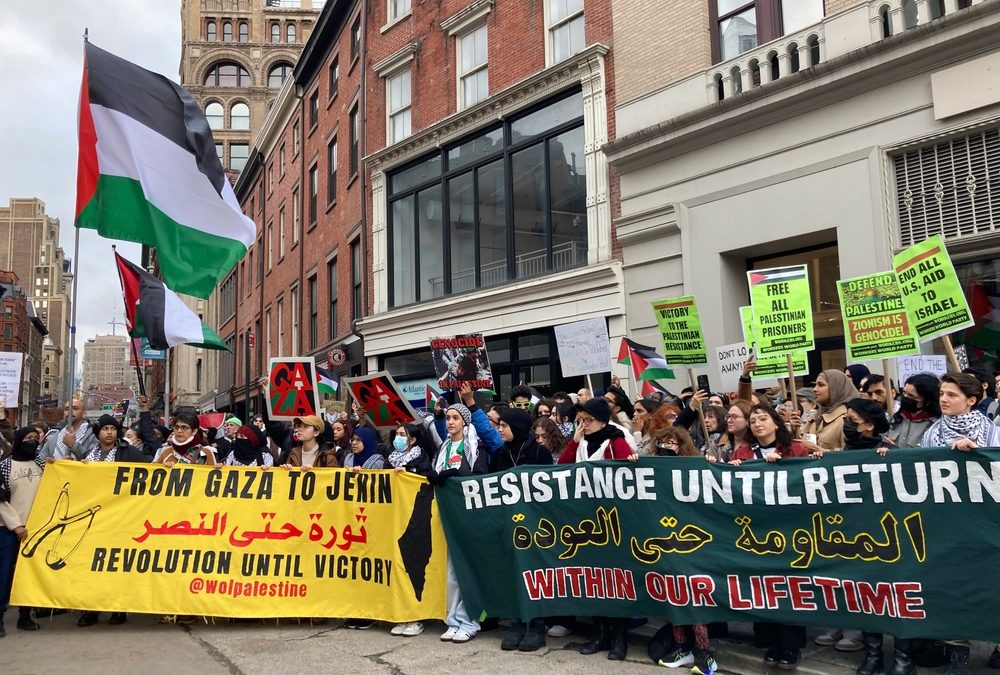
In a startling twist of political fate, the 2024 Presidential election could see a significant shift in the U.S. political landscape, driven by an unexpected demographic: Arab Americans. This group, traditionally strong supporters of the Democratic Party, appears poised to express their disapproval of Joe Biden’s handling of Palestinian relations, particularly with respect to Israeli actions following the October 7, 2023, attacks by Hamas on Israel. Their disillusionment may ironically lead to the re-election of Donald Trump. TALUS wonders: what the halal is going on here? Let’s drill down a bit.
Arabs for Trump? Things That Make You Go “Hummmmus”
By either switching their support to Trump or not voting for Biden in November, Arab Americans may sway the election in Trump’s favor. That’s right, Donald J. Trump, the guy who questioned allowing immigration from “shithole countries” like those in Africa, who angered Palestinians, Lebanese, and Moroccans (among others) by moving the US Embassy in Israel to Jerusalem and who implemented a “Muslim ban” which prohibited US visits and refugee resettlement by select persons in predominately Muslim countries, many with large concentrations of Arabs.
Facts on Arab Americans and Michigan Elections
There are approximately 3.7 million Arab Americans. 85% of Arabs in the U.S. are citizens. The majority of Arab Americans have ancestral ties to Lebanon, Egypt, Syria, Palestine, and Iraq. There is a concentration of Arabs in Michigan, home to nearly 400,000. That population is centered in Wayne County, where there are 190,000 Arab speakers out of a total population of 1.8 million. Wayne County includes the cities of Detroit and Dearborn. Dearborn’s population is 55% Arab and its mayor is also Arab. Rashida Tlaib, the daughter of Palestinian immigrants, represents Dearborn and parts of Detroit in the U.S. House of Representatives. She is one of three Muslim Americans in Congress.
When it comes to swaying an election, here is the situation: Hillary Clinton lost Michigan to Trump by less than 11,000 votes in 2016. Biden won Michigan by 154,000 votes in 2020, including winning Wayne County by 332,000 votes. With the large number of Arab and Muslim voters (the latter estimated at 240,000), it is possible they could change election results in Michigan. As close as the last two elections have been, Arab Americans could push Michigan’s 15 electoral college delegates to Trump and indeed change the national outcome.

Palestinians look for survivors after Israeli airstrike in Rafah
Is Abandoning Biden in the Best Interests of Arab Americans?
Historically, Arab Americans have leaned towards the Democratic Party. The Mayor of Dearborn, Michigan and Representative Tlaib are both Democrats. The growth of the US’ Arab American population owes much of the credit to Democrat support for a 1965 immigration law (which abolished earlier quotas based on national origins that had severely restricted immigrants from non-Western European countries) and the law played no small part in enabling the immigration of 400,000 Arabs to the US between1966 and 1990.
During the 2020 campaign, candidate Biden issued a policy statement directed at Arab Americans. It contained many provisions of a general nature and a few specific items about Palestinian issues in the Middle East, including promoting a two-state solution for Palestinians and Israelis. As President, Biden did fulfill a campaign promise to Arab Americans by ending the “Muslim ban” implemented by Trump. Some of the other items noted in the 2020 policy statement have not yet occurred, such as opening a Consulate in East Jerusalem that would ostensibly serve Palestinians.
Then came October 7, 2023. Biden pledged US support for Israel immediately following the attacks on civilians by Hamas, the ruling Palestinian group in Gaza. Biden’s support of Israel would not seem to have been a surprise to anyone. The US has considered Israel an ally since its formation in 1948 and, in contrast, considers Hamas a terrorist organization. Likewise, one might have reasonably expected that some Arab Americans would not be happy with Biden’s support of Israel. Yet, within days of October 7, there were reports of Arab Americans going even further by saying they would never again support Biden. At that juncture, no one knew how strong the response from Israel would be. But there seemed to be a sense it would be significant.
Arab Americans anger against Biden has continued well beyond October as the situation in Gaza has grown more dire for Palestinians. In Michigan’s Presidential primary election in late February, a protest vote saw over 100,000 Democrats support “uncommitted” rather than vote for Biden. And while Biden’s Administration has publicly suggested Israel should pull back and has also delivered humanitarian aid directly to Gazans, it has not withdrawn its functional military support to Israel.
As to whether or not Arab Americans should support Biden in November 2024, some have pointed out that Donald Trump would be even worse for Palestinians. The Israeli right (led by Prime Minister Benjamin Netanyahu) “understands this and pines for Trump.” Other analysts have written “Donald Trump . . . would be many times worse, many times more accommodating to the extremist elements in Netanyahu’s government.” Judging by Trump’s actions as President and his October 2023 pledge to expel immigrants who support Hamas and once again ban Muslims from the U.S., this would seem to be a valid assessment.
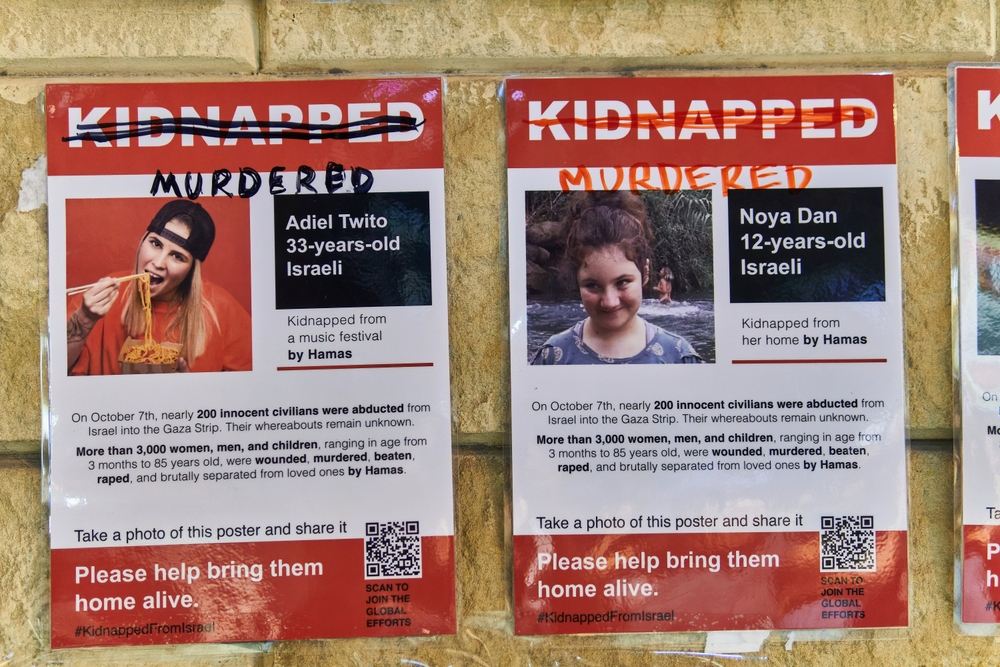
Tel Aviv, Israel Posting October 21, 2023
Winning the Battle, But Losing the War
It seems like many Arab Americans are stumbling upon a broader American reality: no candidate is an exact match for the positions one supports. Unless one fully commits to an individual candidate or single party no matter what, voting is often a compromise. In fact, many consider a vote as mostly a choice between the lesser of two evils, or as I look at it, I’ll vote for the candidate who will do the least damage to the country.
In the end analysis, if Arab Americans want their President to oppose Israel, they really don’t have a viable candidate to vote for in November. Their dilemma highlights a broader issue for some Americans: Although America is the great melting pot, it is a lot easier to be someone who originates from a country, ethnic, or religious group represented by current allies of the United States. When one’s native, ethnic, or ancestral country or group is not an American ally, one may not be able to sway foreign policy in favor of that country or group. Even worse for them, it might be difficult to avoid some negative implications inside the United States. Japanese, Germans, and Italians felt this during World War II. Scrutiny of Arab Americans and Muslim Americans increased after 9/11, so some Arab Americans are likely no stranger to feeling threatened or discriminated against.
In their current battle, Arab Americans may be approaching more challenges as a minority group with a minority view on American/Israeli/Palestinian relations. Although there is increasing American opposition to Israel’s actions in Gaza, Arab Americans may be facing another challenging time right here in the United States. One suggestion of this came in an opinion piece entitled Welcome to Dearborn, America’s Jihad Capital which appeared in the Wall Street Journal in February. Within the past week, numerous news outlets reported on “Death to America” chants coming from participants at a pro-Palestinian rally leading Republican lawmakers in Washington to call upon the Department of Justice to investigate. Though the chant may have been undertaken by just a few in the crowd and rally organizers said that these chants “were a mistake”, the actions of the few might be held against the whole. As such, and unfortunately for disgruntled Arab Americans, Trump’s proposed reinstatement of the Muslim-ban and expelling immigrants who support Hamas might only be the start.