
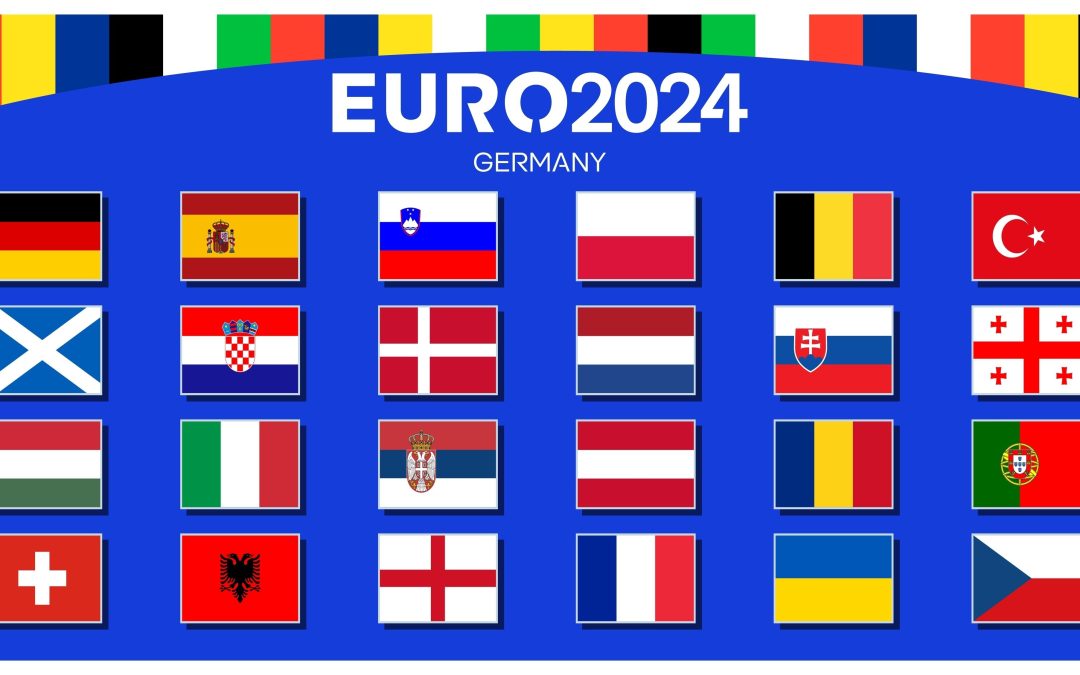
The 2024 UEFA European Championship, hosted in Germany, started just days ago and is poised to be a spectacle of soccer (a.k.a., “football”) prowess and competition. It would seem to be no coincidence that the countries with the best odds of winning are among the largest and wealthiest countries with the best professional leagues: France, England, Germany, and Spain. Amidst all the excitement on the pitch and in the stadiums, international soccer tournaments often shed light on deeper issues of nationalism, racism, and the intrinsic nature of human group dynamics.
While fans dive in and enjoy some of the world’s best soccer, or if you have no interest in the sport at all, let’s look at some of the broader societal lessons of Euro football.
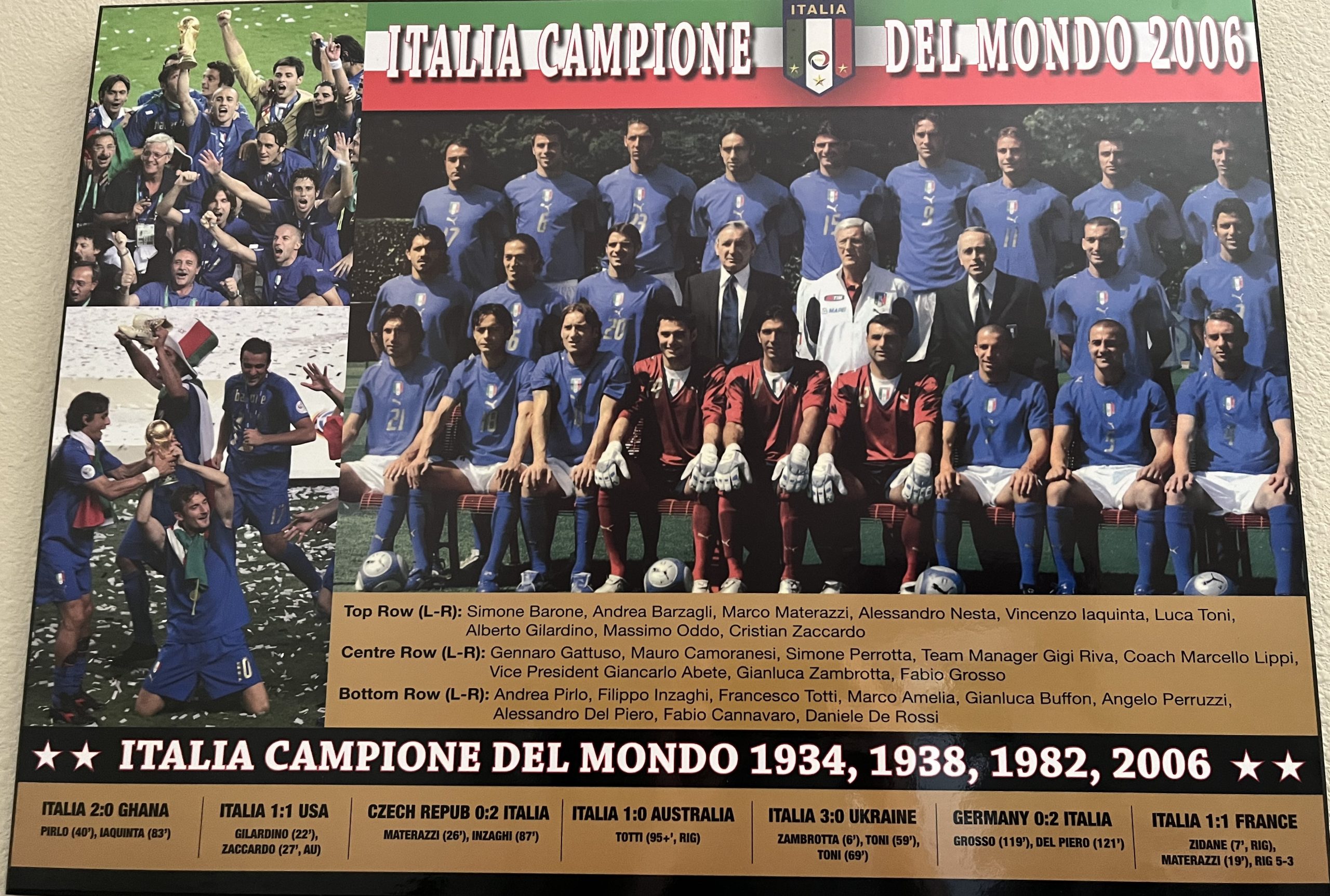
Italy’s 2006 World Cup Champion Squad
From Pride to Prejudice: The Psychology of Euro Football
From a purely functional perspective, any sporting event can be a great source of entertainment for fans and major sporting tournaments can stimulate significant amounts of economic activity. In the case of Euro 2024, UEFA itself is estimated to generate $2.7 billion in revenues from the month-long event. Fans from all over the continent and beyond will travel to the games.
Psychologically, Social Identity Theory posits that group membership provides us with a sense of belonging and raises self-esteem. “We humans tend to categorize people in terms of group memberships, dividing the world into “Us” and “Them.” We often favor individuals belonging to our same social group and discriminate against those in the out-group.” In the more specific case of European football, research found strong evidence of in-group favoritism based on national identity.
The psychological motive behind sports fandom may be derived from the human need for social identity and belonging to the in-group. Supporting a team provides a sense of community, and individuals can feel connected to something larger than themselves. Often an escape from daily stress, being a sports fan can not only boost your self-esteem, but also make you happier.
On the flip side, the “out-group” part of Social Identity Theory may explain some of the negative events that took place after the Euro 2020 final. The England-based tournament was won by Italy in penalty kicks following a beautifully played final. The aftermath was not so pretty in many respects. Skirmishes between Italian and English fans were reported on the streets of London. Social media videos appeared with headlines like, “Violent English Fans Attack, Racially Abuse Italians”. English fans even turned on some of their own players, taking to social media to criticize three black English footballers (Bukayo Saka, Marcus Rashford and Jadon Sancho) who missed penalty kicks. The ugly posts included the use of “monkey emojis and racist language such as n****r”. Such outbursts are unfortunately not all that uncommon when it comes to European football and often serve as reminders to underlying political and social issues across the continent.
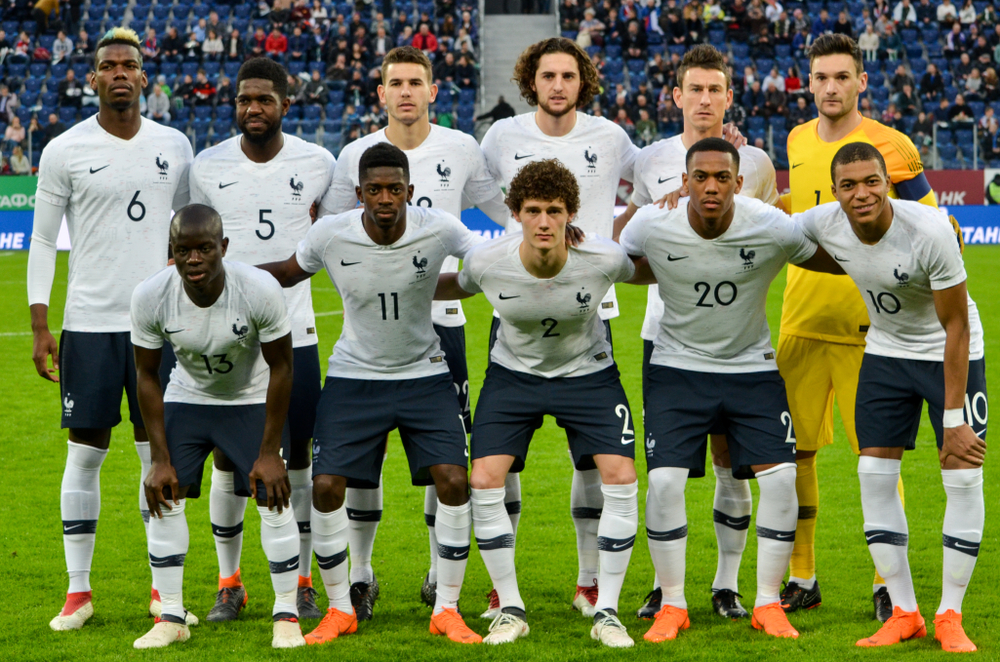
France’s Diverse 2018 National Team
Colonial Legacies, Social Integration, and Continuing Racism
The clear evidence “on the pitch” indicates that wealthier European countries benefit more from foreign-born, ethnically diverse players. Beyond financial considerations, the presence of non-native players in European national teams is often tied to historical and colonial legacies. Countries like France and the UK, with extensive colonial histories, have seen significant immigration from former colonies. This has led to more diverse populations and, consequently, more diverse national teams.
However, in many circumstances, the proportionality of immigrant ethnicity and race on the national team is out of kilter to the overall nation. Take for example the English national team, which at some stages (e.g., 2018) has been nearly 50% black or mixed race and less than 50% white. Yet, the overall population of the country is less than 4% black. Similarly, over 40% of England’s Premier League is black. Yet, perhaps due to the lack of corresponding societal acceptance, we still see outbursts against black footballers like we saw in the aftermath of Euro 2020. Furthermore, black representation in soccer leadership positions is also extremely low. And the crowds? They also tend to be mostly white (and sometimes less than friendly to non-whites) leading some black parents to question whether they would ever bring their young child to a game.
In 1998, France won the World Cup with a team made up of players with ethnic backgrounds from North Africa, West Africa, the Caribbean, the Pacific islands, Armenia and the Basque country. The phrase “Black, Blanc, Beur” (black, white and Arab) was popularized as an adaptation of the traditional “bleu, blanc, rouge” (blue, white, red) slogan which represented the colors of the French flag. While the French team was an “in-group” for France on the field, not all of French people were on board. France’s far-right Front National leader, Jean-Marie Le Pen, protested that “the diverse ethnic roots that ran through the squad meant this was not truly a “French” team and this was not a victory for the nation at all.” Coincidentally, Le Pen’s daughter Marine is still active in French politics as a 3-time Presidential candidate and, though perhaps not as extreme as her father, does call for anti-immigration policies.
Meanwhile in Germany where the national team features several players of African and Turkish descent, a recent survey indicated that a significant portion of the population prefers a “whiter” national team. Though this was still a minority view in the poll, it is clear that the underlying xenophobic sentiments are still present. This duality reflects broader societal debates about immigration, integration, and national identity.
It is no wonder that Romulu Lukaku, a star on the Belgian national team said:
“When things were going well, I was reading newspapers articles and they were calling me Romelu Lukaku, the Belgian striker. When things weren’t going well, they were calling me Romelu Lukaku, the Belgian striker of Congolese descent.”
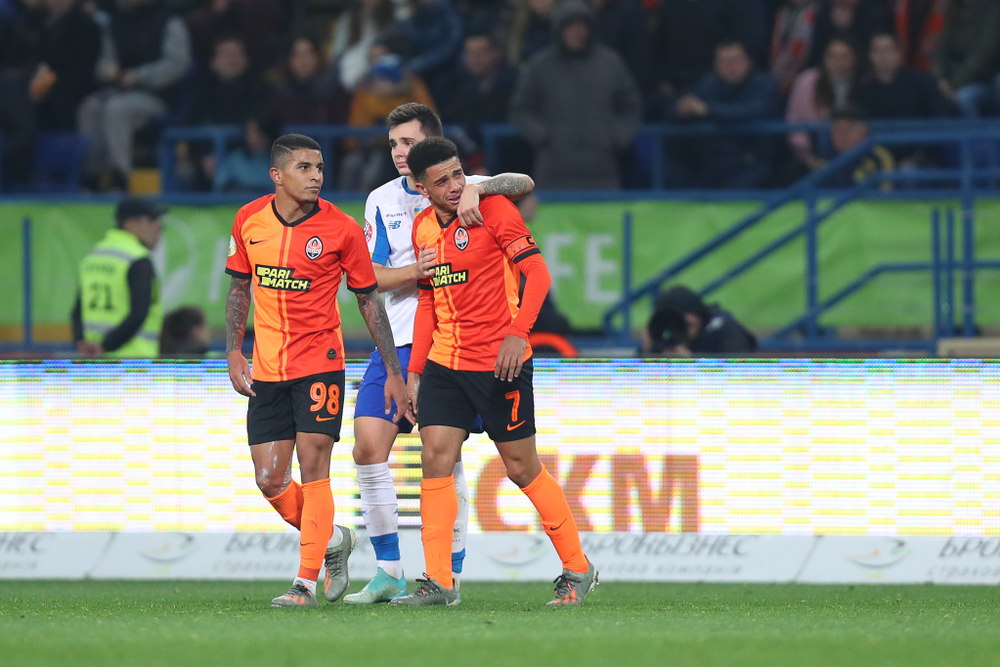
Captain Taison Barcellos Freda crying reacting to fans and ultras screaming racist chants. Ukrainian Premier League.
Conclusion: The Path Forward
The Euro tournament stimulates a strong sense of national spirit among competing nations as thousands travel long distances to don the team’s colors: the blue of Italy’s Azzurri, Netherlands fans in their “highway worker orange”, and the English (somewhat ironically based on the aforementioned examples of racism) in white. At the same time, such soccer gatherings can also put political and social tensions on display, with some fans behaving in a threatening manner towards fans of other nations, racist chants, and even some fans being critical of non-whites on their home country squads.
The integration of diverse players into national teams will continue as globalization and migration continues. However, soccer continues as a reflection of broader societal concerns about immigration, national identity and unity, economic disparity, and integrity. Just as in broader society, achieving true acceptance and integration will take time. While soccer can play a leading role in improving the broader societal conflicts, we are not there yet. For sure, soccer integration and acceptance may spur societal efforts to address inequalities and reduce deep-seated prejudices. However, change is unlikely to be swift, measured not in months or years but generations. While I am hopeful for improvement, if I were a gambling man, I would bet that it will not be even 95% solved in the next 100 years.
For now, I am left to focus on the positive sense of belonging to my in-group: fellow Italians. Accordingly, I’ll be in front of the television wearing my Azzurri blue shirt, eating some homemade Calabrese soppressata, drinking a Peroni, and chanting “Forza Italia!”