
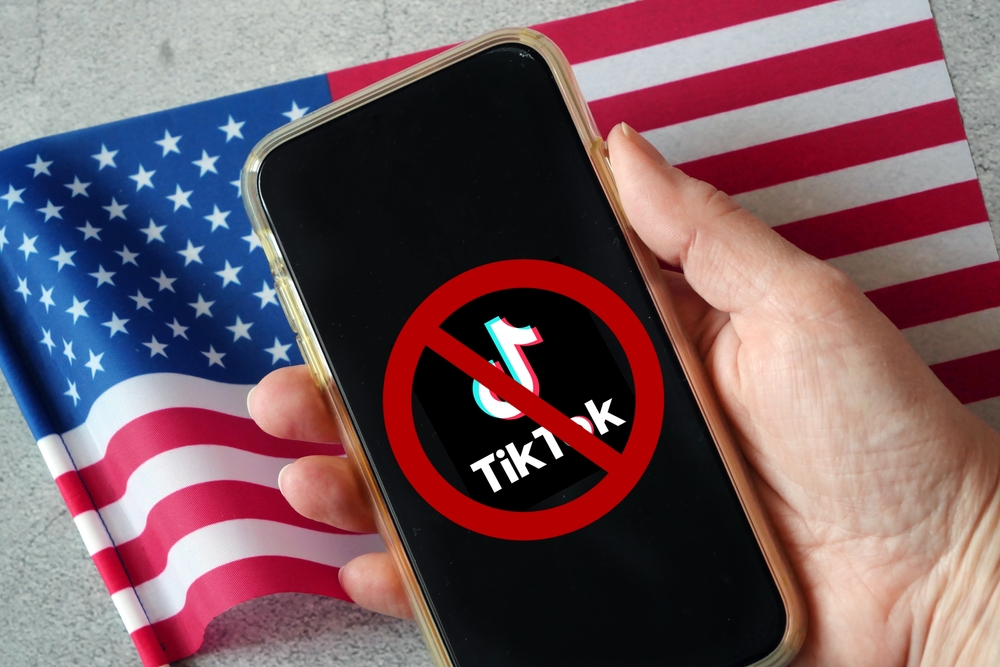
Today’s Topic: Is the TikTok Clock Running Out?
Last week, Congress appeared to be in the mood for an old-fashioned Western duel by giving TikTok an ultimatum: terminate the ownership of China’s communist government in the short-form video entertainment platform or we will terminate TikTok. A social media platform with potential to overreach using user data and pose a national security threat? That’s the kind of online manipulation intrigue that led to the creation of They’re All Lying to Us (TALUS) . . . so, of course, we had to dig deeper if for no other reason than to provide an appropriate online grave for a social media giant.
TikTok, the new social media behemoth
TikTok, a name synonymous with short-form video entertainment, has seen an astronomical rise since its inception. Initially launched in China in September 2016 by ByteDance, TikTok (known as Douyin in China) quickly amassed a large user base. As of 2023, TikTok has over 1.5 billion monthly active users and is projected to reach 1.8 billion by the end of 2024, TikTok’s user base is diverse, spanning numerous countries and demographics. TikTok is the world’s fifth largest social platform, trailing Facebook, YouTube, What’sApp, and Instagram.
Here are some highlights of TikTok’s presence in the United States:
- Over 150 million monthly users, and likely just over 100 million “regular” users;
- About 2/3 of U.S. users are aged 12-34; globally 36% of TikTok user are aged 18 to 24;
- While one source indicated US adults spend an average of 55 minutes on the app, another source indicated that users age 11-17 spent 113 minutes per day on TikTok – compare that to 40 minutes per day on YouTube;
- Nearly 40% of GenZ (12-27 years old) are using Instagram and TikTok for searches rather than Google.
Intro to What’s on TikTok
While some might say TikTok’s content varies widely, from entertainment and dance to educational material, it appears that most of its content is short videos of less than a minute typically involving some dancing or kids, dogs, or cats doing ridiculous things. In my first venture into TikTok’s site, I found myself watching a 6-minute video of soccer superstar Lionel Messi shopping at Publix with his family. My impression of Messi – he seems to be a decent guy, stopping several times allowing shoppers to take a pic with him. My impressions of TikTok – as I watched the video I could feel the slow passage of time . . . tick-tock, tick-tock, the minutes falling off the clock while more of my brain cells died – kind of like I felt watching MTV in the 1980’s when I was a teenager.
Americans Are Dependent on TikTok for Entertainment, News, Business, and Jobs
What are American adults spending 55 minutes a day looking at on TikTok? Hashtag statistics show that “entertainment” is by far number one content category. 43 percent of American TikTok users regularly get news from TikTok. Companies are increasing advertising on TikTok, often competing to make the most catchy, entertaining video to do so. Among the most followed brands on TikTok are WWE, ESPN, Netflix, Dunkin’ and Chipotle. Some TikTok creators make a living off of being an influencer. One influencer made $120,000 a year from his side hustle on TikTok. TikTok also directly employs nearly 7,000 persons in the United States and has offices in Los Angeles and New York.

China has a history of hacking US data
Reasons Why TikTok Should Be Banned
Here’s a list of some of the primary reasons why some believe that TikTok should be banned should the Chinese Government continue to be an owner:
- TikTok could be used as a tool of the Chinese government to compromise US government workers or others, for example by blackmailing them. TikTok already showed a propensity to do this when it spied on journalists who were investigating TikTok’s surveillance of app users;
- In a broader sense, TikTok ‘s algorithm could be manipulated to sway public opinion in the US. If one saw how TikTok was able to activate its users to contact Congressional offices last week to protest the proposed ban, one could see how that might work! Since Chinese law requires “any organization or citizen” in China to “support, assist and cooperate with state intelligence work”, TikTok could conceivably be compelled by the Chinese government to assist in such an effort;
- China blocks most US social media platforms (including Google, YouTube, X, Instagram, WhatsApp and Facebook) because they refuse to follow government rules on data collection. So it would seem fair for the US to do the same to TikTok.
- When former President Trump had sought to ban TikTok in 2020, China responded by adding content-recommendation algorithms to its export control list, basically restricting one of TikTok’s most valuable assets and seemingly limiting the attractiveness of TikTok to a US purchaser. This suggests China does indeed value TikTok as a government asset.
- TikTok has previously been fined for mishandling child data, including $370 million by the EU.
- The US has a history of limiting foreign ownership of certain media assets. When it comes to broadcast license, there is a longstanding law which limits foreign ownership of broadcast licenses to 20%. In fact, Australian-born media mogul Rupert Murdoch became a US citizen in the mid-1980’s to facilitate his purchase and creation of the Fox television network.
Reasons Why TikTok Should NOT Be Banned
- It’s just damn fun!
- TikTok is a significant economic force, employing nearly 7000 Americans, is a growing platform for US businesses to market and sell products.
- There are many other Americans who rely on TikTok for income, their livelihoods may be at stake.
- TikTok and others argue that free speech would be limited by a ban.
- Killing TikTok would only enhance the already great online power of other social media platforms, including Meta (owner of Facebook and Instagram) and Google, which would regain searches currently going to TikTok and also owns YouTube.

Chinese spy balloons have been shot down by the US
And Then There’s Politics
Getting the Chinese government out of TikTok seems to be one of those issues with broad support from Democrats and Republicans. The House of Representatives passed the “Chinese government must sell or TikTok will be banned” bill by 362-65! But now, the Senate has seemed to pause, perhaps in part due to mixed views from the public. A year ago, 59% of Americans saw TikTok as a threat to national security, suggesting a clear majority favored a ban. More recently, it seemed like it had become a 50/50 issue. This change in attitude might cause one to believe that TikTok’s power of influence is quite effective and perhaps enough to stop the latest bill in its tracks.
What About Biden?
TikTok’s influence on its youthful base of users may also answer the question “why has the TikTok issue arisen now?” Though we all may want to forget that 2024 is a Presidential election year, it is no secret that President Biden is struggling with his popularity among American youths. One issue making Biden particularly unpopular with youths is American support of Israel in its war on Hamas in Gaza. Against that backdrop, The Wall Street Journal observed that one of the major reasons behind the urgency to pass the bill could be Washington’s concern over the abundance of content regarding the Israeli actions toward Palestinians in Gaza. In the same article, an analysis of TikTok content determined that views of videos with pro-Palestinian hashtags outnumbered those with pro-Israel hashtags by 69-to-1! And while we could find no information indicating that this skew toward the Palestinian cause was a result of TikTok manipulating algorithms, there is some reported history of the app censoring content critical of the Chinese communist government, including treatment of the Uyghur ethnic group and 1989 Tiananmen Square protests.
Trump’s TikTok Flip-Flop
Former President Donald Trump has recently opposed the idea of banning TikTok, a notable reversal from his previous stance during his presidency. This change in position follows his meeting with Jeff Yass, a GOP megadonor and hedge fund manager with a significant financial interest in TikTok’s parent company, ByteDance. Yass has been a substantial contributor to the Club for Growth, a conservative group that has expressed opposition to anti-TikTok efforts, advocating for free speech and innovation, values Yass aligns with. Trump’s newfound opposition to the TikTok ban was made public after his engagement with Yass and the Club for Growth, suggesting that financial and ideological influences from his supporters might be shaping his views on this matter. Alternatively, Trump may see that TikTok’s continued existence may further erode Biden’s popularity with youth voters.
Conclusion: It is Best to Restrict TikTok
Requiring the Chinese government to sell its interest in TikTok seems like a good idea. The risks related to the Chinese government’s ability to affect US public opinion are too great. China’s history of corporate espionage, government system hacking and balloon spying are evidence of their bad intentions. Plus, TikTok could prove to be another in-road for exploitation of devices and computer systems, which may be one reason for US government bans on employee devices downloading the app. And what if China invades Taiwan? Will TikTok be used to affect US public opinion and make a Chinese takeover of Taiwan easier?
Beyond the singular issue of TikTok, the US government needs to do more when it comes to data privacy and controls. It might start by implementing data privacy controls akin to those in the EU and reducing so called “Section 230” protections which provides immunity for online computer services with respect to third-party content generated by its users. Such changes could make it more difficult for foreign governments to access user information via data brokers and become political “influencers”.
In the big picture, I think what is also necessary is more controls on digital media generally. While we live in a connected world, we still need to protect our own country first. Sometimes, this means limiting certain forms of speech and communications. While I am always leery of our government taking on that task, I am afraid we have little choice when it comes to less than friendly foreign interests. We just need to make sure our government stays on point and does not go too far.