
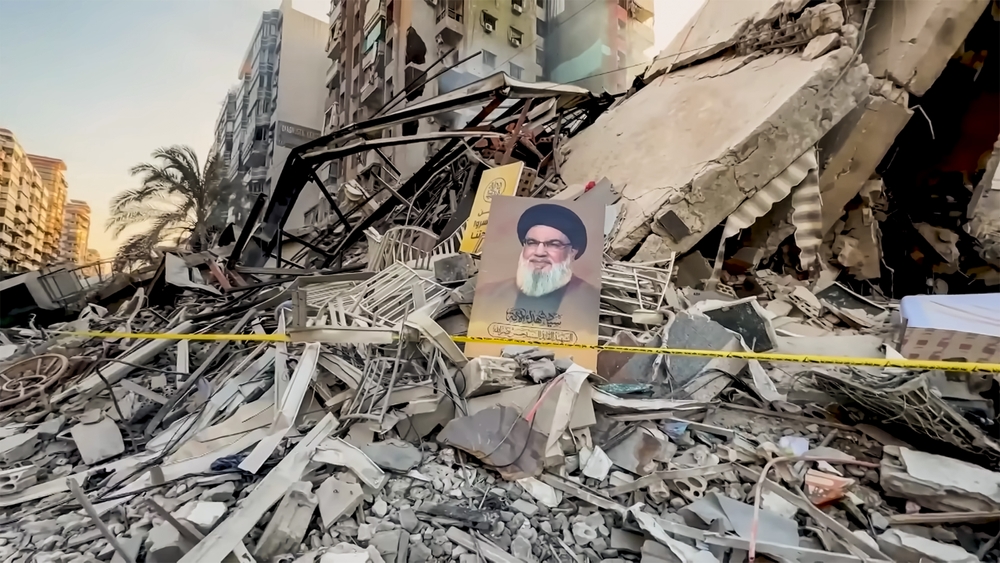
Question: Why War, Why Now?
On February 28 when the US and Israel bombed Iran, my first thought was “Good!” Iran can’t be trusted and they are a destabilizing force in the region. Moreover, the Iranian people seem oppressed and want a secular democracy. Then, like all the talking heads on television and social media, I began to wonder: Why Iran? Why Now?
Within a day, I arrived back at my usual manner of thinking: FOLLOW THE MONEY! I thought about all the other countries the current U.S. Administration has engaged with over the past year: bullying in negotiations with Iran was not working, so the next step was necessary. Get rid of the current leadership until we found a new Iranian leader who would be willing to join the global order led by U.S. economic power and the power of the ultra-rich ruling class. What’s in it for him? (Yeah, it can’t be a woman in Iran, so I get to use some latitude with my pronouns.) That wiling Iranian could gain membership in the league of global oligarchs who rule the world.
After the Administration had fumbled around for a week to justify the decision to go to war, my intuition seemed confirmed in the headlines: “Trump says he must be involved in picking Iran’s next leader”. With the common dramatic reality-TV style of the U.S. Administration, Khamenei was “fired” in a much more violent fashion than any contestant on The Apprentice. Now we are on to the next reality show, Who Wants to be a Billionaire?
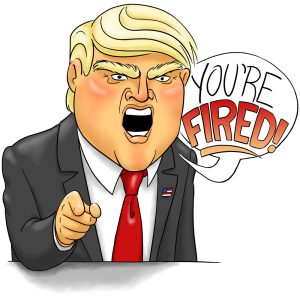
(credit: Shutterstock – used with permission)
U.S. Foreign Policy: Bully Until Submission (P.S. It’s all about the $$)
The backdrop to the current U.S. foreign policy is the global movement toward a richer, more influential billionaire nobility and ultra-high-net-worth (UNHW) group that operate across borders and control more of the world’s economy (I’ll call it Global Oligarchs, Inc. for convenience.) Researchers increasingly warn that extreme wealth concentration can translate into outsized political influence and the emergence of oligarchic power structures. In short, a relatively small group of individuals now has enormous influence over investment flows, energy markets, technology platforms, and capital allocation. Those forces increasingly shape political decisions.
Against that backdrop, the current U.S. administration’s approach to foreign leadership appears quite simple. Countries are expected to recognize their place in the global system dominated by American economic and military power . . . or else.
- If a leader cooperates with that system, relations tend to stabilize.
- If a leader resists the system, pressure builds — economically, diplomatically, or militarily until one of two things occurs:
-
- The leader adjusts; or
- Someone inside the country replaces them, sometimes only after the U.S. removes the leader from power.
Ideology often matters less than alignment. A government can be authoritarian, corrupt, or far removed from Western democratic ideals and remain acceptable if it operates within the global economic order. In practice, the system tends to reward leaders who cooperate with global capital flows, energy markets, and investment networks (and other billionaires!).
A few recent examples illustrate the pattern:
-
- Saudi Arabia and Crown Prince Mohammed bin Salman (MBS): Forget the discussion of human rights issues, the sequestering “squeeze” put on other Saudi billionaires which benefitted the sovereign wealth fund MBS controls, and the alleged murder of journalist Khashoggi. MBS had a wonderful welcome to Washington a few months back and is getting an F-35 fighter and access to advanced U.S. computer chips in return for promised U.S. investment. Oh, and then there are the deals that benefit Jared Kushner and Steve Witkoff as well as a new Trump Tower and development in Saudi Arabia. Behind it all, Saudi Arabia sits at the center of global oil production and sovereign wealth investment.
- Venezuela and Nicolas Maduro: A country with vast oil and gold reserves, but historically outside the preferred financial system with detested socialist roots, faced repeated sanctions and political pressure until the current U.S. Administration physically removed him from leadership.
- Ukraine, Russia and Putin: There appears to be a general reluctance to strongly oppose Putin. In a certain way, he seems to be accepted as if he were a major shareholder in Global Oligarchs Inc. He is tolerated as a resourceful shareholder considering the global commodity markets which remain deeply tied to Russian energy exports, limiting how far economic isolation can realistically go.
- Gaza reconstruction: Even before conflict between Israel and Hamas ended, discussions quickly turned toward reconstruction funding, infrastructure investment, and development financing.
The common factor is not ideology. It is economic integration and/or submission, with benefits accruing to billionaire and ultra-high net worth (UHNW) individuals who own and work at Global Oligarchs, Inc.
In sum, one could think of this structure as having an informal governing body: The Board of Directors of Global Oligarchs, Inc. In reality, it is a fiction that lacks a formal structure, but in the real world it seems reasonable to believe that there exists a loose network of political leaders, sovereign wealth funds, technology billionaires, and energy magnates whose interests increasingly overlap. Politically, the powerful within countries that operate within this system enjoy stability and wealth. Countries that remain outside it face pressure until leadership changes.
Iran: The Largest Energy Power Still Outside the System
Iran represents one of the most significant exceptions to the global economic order. The country controls enormous oil and gas reserves and sits at a strategic crossroads of global energy routes.
Yet Iran remains heavily sanctioned and largely excluded from Western financial systems. Studies examining the economic impact of sanctions show that Iran’s long-term isolation has significantly reduced foreign investment and economic integration. Negotiations between Iran and Western governments repeatedly revolve around one central issue: Sanctions relief in exchange for reintegration into global markets.
Which Leads to a Different Explanation for War
Perhaps the objective is not simply regime destruction. Perhaps the objective is elite realignment. Apply pressure — military, economic, diplomatic. Create instability inside the system. Watch what happens among the competing power factions.
If someone inside Iran’s leadership decides that integration into the global economic system is preferable to continued isolation, that person becomes the key figure. That is the recruitment hypothesis. Not recruitment to democracy. Recruitment to the global capital system.
In simpler terms: Recruiting the Iranian representative to the Board of Directors of Global Oligarchs, Inc.
The Historical Model Already Exists
Before the 1979 revolution, Iran under the Shah was deeply integrated into Western oil markets and financial systems. Oil exports flowed freely. Iranian elites maintained close relationships with Western corporations and governments. From the perspective of global markets, the system was predictable and stable.
A modern version of that arrangement — an Iran reintegrated into global energy markets and capital flows — would dramatically reshape the region. From the perspective of global markets, the outcome might be summarized with an ironic phrase: Make Iran Great Again.
Not politically, but economically. Great for global capital and the interests of Global Oligarchs, Inc.
The Question Beneath the War
While some might criticize the validity of the “recruiting an Iranian oligarch” hypothesis, the theory is not merely a cynical perspective made in an “oligarch vacuum”. Indeed, the theory does not dismiss that displacing the current Iranian regime may well be beneficial for overall U.S., Western, Regional, and Global interests beyond the billionaire class. There are legitimate security concerns at risk. Iran’s nuclear ambitions are real. Regional tensions are real and are shown by Iran lashing out not only against American and Israeli interest but many other countries in the Middle East. Iran’s support of Hezbollah and other terrorist groups and past transgressions against Americans are not forgotten.
But when military conflicts align closely with energy incentives and economic integration pressures, broader questions naturally arise. Is the objective simply to eliminate a threat?
Or is it also to bring one of the world’s largest isolated energy powers into the global economic system? If the answer is both, the implications extend far beyond Iran. They suggest that the modern global order increasingly operates at the intersection of wealth concentration, energy markets, and political power. And that the most important decisions may be made not only by governments — but by the small economic elite that increasingly shapes them.

Oligarch Whack-a-Mole (credit Shutterstock – used with permission)
March 8: What Went Wrong?
Today the new Iranian leader was appointed: the son of the former leader! Perhaps no Iranian wanted a Board position in Global Oligarchs, Inc. Perhaps they already are rich enough, or perhaps the gang they hang out with now is more threatening than the threat of American or Israeli bombs from afar.
Don’t feel too bad for Global Oligarchs, Inc. The price of oil shot up and many of its members and shareholders (like MBS, Putin, and stakeholders in big oil companies) will make even more money. Even before the announcement, American leadership already had indicated that Iran’s new leader “is not going to last long.” It seems they are committed to a game of “whack-a-Mullah”. Stay tuned!
–March 8, 2026