

Introduction
In a recent executive move, President Joe Biden has taken steps to limit the number of migrants entering the United States through the southwestern border. This decision reignites a long-standing debate about immigration, reflecting America’s perennial struggle to find a balanced approach to this complex issue. The dichotomy in American sentiment toward immigration can be described as almost bipolar: while it ostensibly brings macroeconomic benefits, it also poses significant challenges, particularly to the less affluent segments of society. This article explores the multifaceted impacts of immigration on America, including the perspectives of Wall Street and Main Street, and concludes a recalibration of the nation’s priorities is needed to find the right compromise on immigration policy and a better America.
The Economic Argument for Immigration
From an economic standpoint, most analysts believe immigration has been a boon for the United States, at least for the broader national economy, or what I call the “Wall Street economy”. Immigrants provide a steady influx of labor, which is essential in sectors such as agriculture, construction, and technology, where there is often a shortage of domestic workers. This is true for Southwest border migrants, where a post-pandemic surge has ostensibly led them to fill crucial gaps in the labor market, which in turn supports economic (and Wall Street) growth. This post-pandemic surge in immigration was specifically cited by the Congressional Budget Office (CBO) when it released updated economic projections adding an additional $7 trillion to the Gross Domestic Product (GDP) over the next 10 years. These increases will also add an additional $1 trillion in tax revenues to the federal government.
Moreover, immigrants support economic growth as consumers. They increase demand for goods and services, which stimulates business activity and drives job creation. This influx of new customers is beneficial for businesses of all sizes, but especially for large corporations that dominate the stock market. The growth in customer base and labor force translates into higher profits, which propels stock prices and benefits investors.
In addition to immediate economic contributions, immigrants also bring innovation. Many of America’s leading companies, particularly in Silicon Valley, were founded or co-founded by immigrants. The diverse perspectives and skills they bring foster innovation, driving technological advancements and economic competitiveness on a global scale. While these individuals may not be the ones streaming across the Southwest border, many arrive via other pathways such as employment-based immigration.
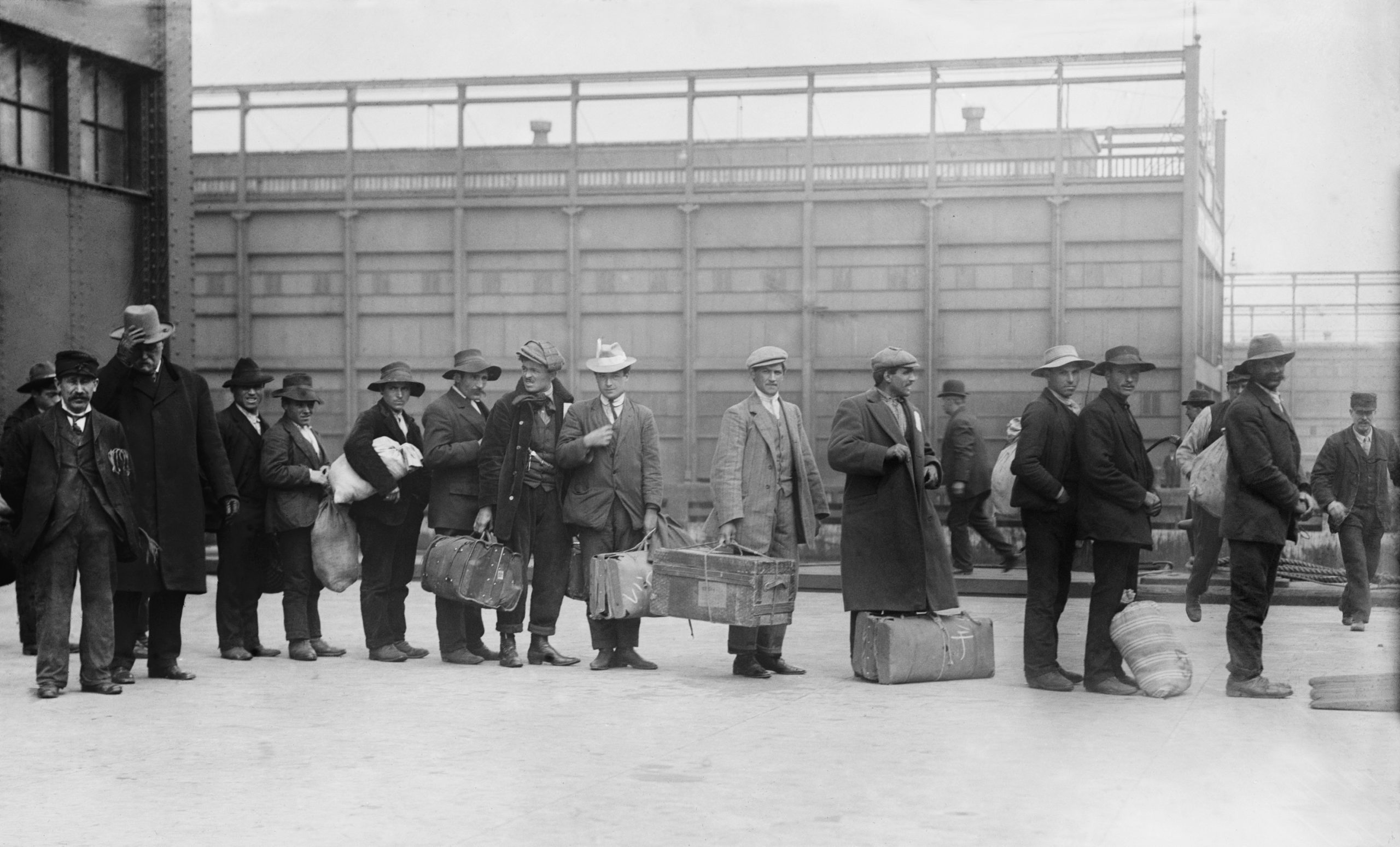
Immigrants wait in line at Ellis Island
The Main Street Perspective: Challenges and Concerns
While Wall Street and the broader economy reaps significant benefits from immigration, the story is different for Main Street, especially among hourly wage earners and lower-middle-class Americans. (Coincidentally, this “Wall Street versus Main Street” dichotomy may explain why many analysts indicate how well the 2024 economy is doing while many Americans look at the costs of food, housing, gas, etc. and wonder “what the hell are these analysts talking about?!”) Americans who are low-wage-earners may perceive the influx of immigrants as a threat to job security and wage stability. The competition for jobs, particularly in low-skilled sectors, can drive down wages and make it harder for native workers to secure employment and/or achieve upward mobility. An influx of new residents may not only compete for jobs, but also for housing and other local commodities, driving up these costs for the native population.
Additionally, immigration places a strain on state and local governments, which bear the brunt of providing services to new arrivals. While refugees, asylum-seekers and their immediate families contributed an estimated net $37.5 billion to the federal government between 2005 and 2019, they cost state and local governments an estimated net of $21.4 billion. Furthermore, public schools, healthcare systems, and social services often face increased demand, stretching already limited resources. The financial burden of supporting immigrants can lead to higher taxes or reduced services for native residents, fueling resentment and opposition to immigration.
The cultural impact of immigration is another contentious issue. While diversity enriches American society, it also poses challenges to social cohesion. Rapid demographic changes can create tensions, as communities struggle to integrate newcomers and adapt to cultural shifts.
The Bipolar Nature of American Immigration Policy
America’s inability to settle the immigration debate stems from its seemingly conflicting perspectives on the issue. On one hand, there is a recognition of the economic benefits and the moral imperative to provide opportunities for those seeking a better life. Gallup polls from 2023 indicate that 68% of Americans believe immigration is good for the country. On the other hand, 41% of Americans want immigration levels decreased. This may be due to legitimate concerns about the economic and social costs, particularly for those already struggling within the existing system. And there may be some concerns about which immigrants come (see former President Trump’s comments on shithole countries) and at what pace immigrants arrive: for example, consider the recent spike in Southwest border crossings of migrants which has led immigration to become the second biggest issue of concern among likely voters in the 2024 Presidential election.
These seemingly conflicting views makes Americans appear bipolar on immigration. This is reflected in the country’s immigration policies, which oscillate between periods of openness and restriction. President Biden’s recent executive action is just the latest in a long line of attempts to strike a balance. Aside from the practical problems associated with finding the right balance and policies that work (for example, controlling the flow across the Southwest border), such efforts are often unsustainable. In my opinion, immigration will continue to be a flashpoint and largely unresolved issue as long as America’s economic inequality and social cohesion remain out of balance.
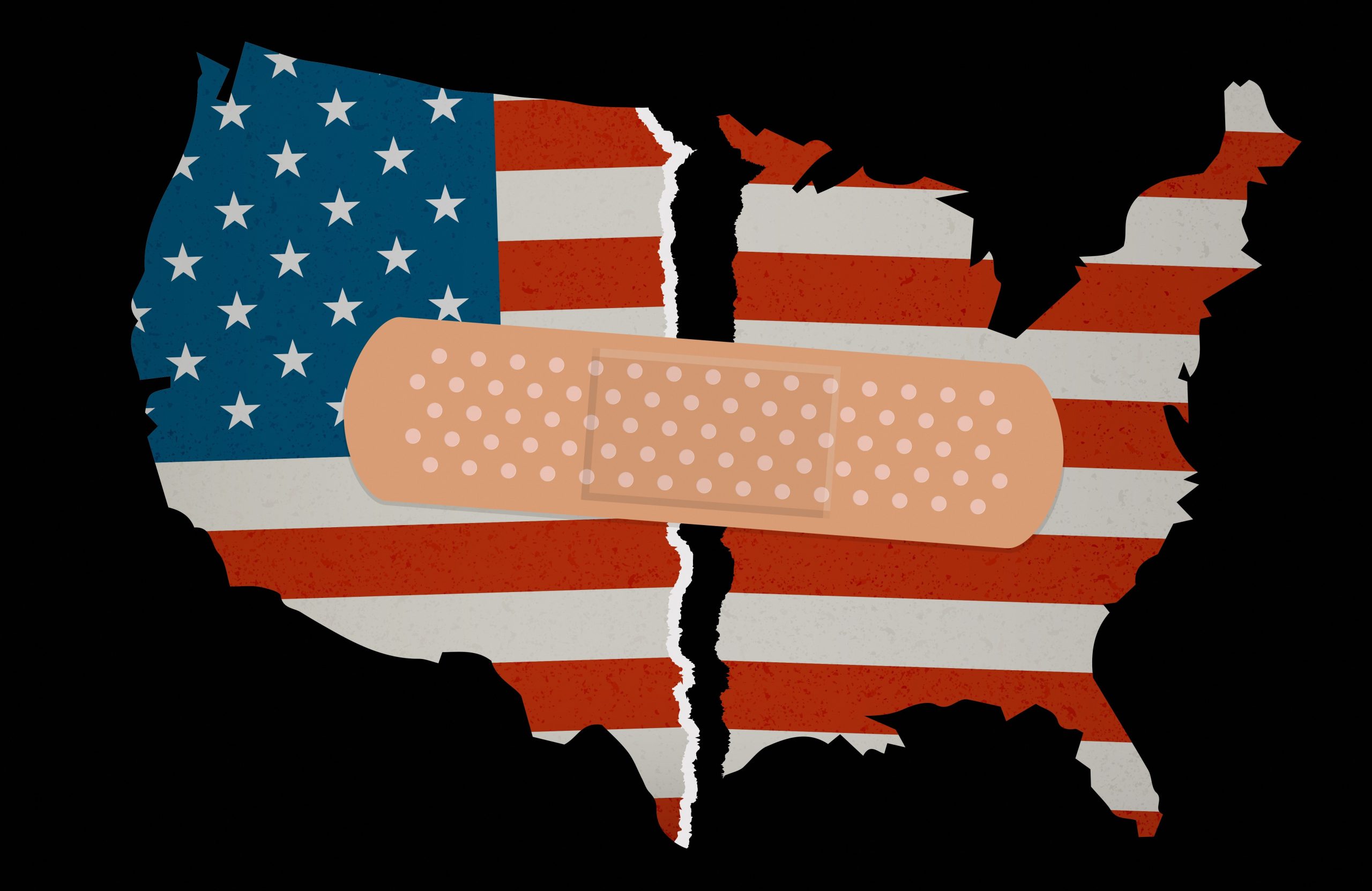
We need to repair America before we can agree on immigration
Rebalancing America: Toward the Common Good
To better resolve the immigration debate, America must first address the broader issues of economic inequality and the “spirit of divisiveness”. To be clear, American individualism is a unique and desirable attribute of our country which makes us clearly distinguishable from all others. Additionally, a greater level of capitalism is preferred to more comprehensive socialism one might find in Europe. However, over the past few decades, the country has shifted too far towards individualism, prioritizing the interests of the wealthy and powerful over the common good. This imbalance is most evident in the growing wealth gap, where the rich get richer while the middle and lower classes struggle to make ends meet.
Rebalancing the country requires a commitment to policies that promote wealth distribution and social equity. This might include progressive taxation, investment in public services, and support for workers’ rights. By addressing the root causes of economic disparity, the nation can create a more inclusive and equitable society.
With a more balanced approach to wealth distribution, the issue of immigration will become easier to manage. A society that prioritizes the common good (and a corresponding acceptance from far left progressives that, in this context, we mean the American common good) is better equipped to integrate newcomers and address the challenges they bring. This means creating pathways for immigrants to contribute to the economy without displacing native workers and ensuring that the benefits of immigration are shared broadly across society.
Conclusion
The debate over immigration in America is a reflection of the nation’s broader struggle with economic and social inequality and divisiveness. President Biden’s recent executive action highlights the ongoing challenges in finding a balanced approach to this complex issue. By addressing the underlying causes of economic disparity and prioritizing the common good, America can create a more equitable society where immigration is seen not as a threat, but as an opportunity for growth and renewal. Only then can the country move beyond its bipolar stance on immigration and have any chance to agree upon a stable policy approach. Otherwise, immigration will remain a perpetual political battleground.