
June 2024: While overall inflation has been the buzz over the past two years, inflation is much more under control in 2024. However, this doesn’t mean prices have come down, just that they stopped going up as fast. Housing, perhaps the biggest expenditure in virtually every American’s life, is still accounting for a large portion of continued inflation as prices have gone through the roof! Moreover, housing prices seem less likely to recover to more reasonable levels in any short period of time. The American Dream of home ownership and the cost of renting a place to call home are less affordable than ever.
American Housing Status Report
In recent years, the American dream of homeownership has become increasingly unattainable for many. The combination of soaring home prices and stagnant wage growth has created a housing affordability crisis. Here are some key statistics highlighting this issue:
- Home Price Increases: From 2020 to 2024, home prices in the U.S. increased by over 18% annually, according to the S&P CoreLogic Case-Shiller U.S. National Home Price Index (St. Louis Fed).
- Income vs. Home Prices: While median home prices surged, median household incomes only grew by approximately 2-3% per year during the same period (St. Louis Fed).
- Affordability Index: The National Association of Realtors’ Housing Affordability Index showed a significant decline, indicating that fewer families could afford to buy homes (SF Fed).
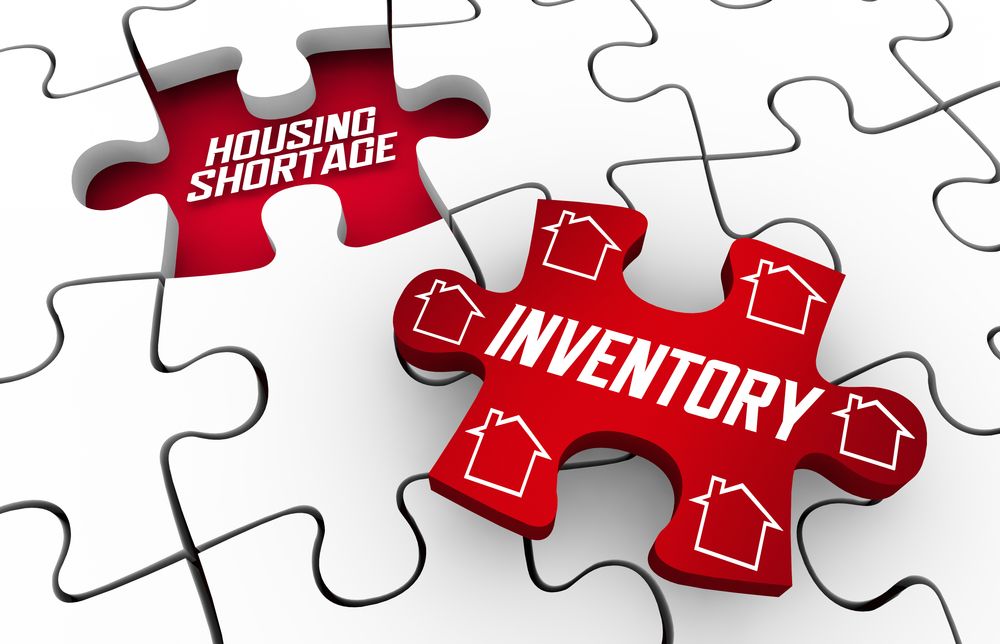
A lack of housing inventory is a long-term, structural problem
Let’s Play the Blame Game: Housing Prices are _______’s Fault!
Affordable housing is likely to play a big role in this year’s Presidential election. An in-depth analysis makes it appear less clear as to whether Joe Biden, Democrats, Donald Trump, or Republicans are more to blame for the problem. For example, broader inflation may have been aggravated by government stimulus under Biden and likewise caused housing to become less affordable. However, the country’s housing shortage surged 52 percent to 3.8 million units between 2018 and 2020 when Trump was President. Nevertheless, as the guy in charge when the proverbial shit hit the fan, Biden will likely bear more of the blame in 2024.
One of the main drivers of housing inflation has been the limited supply of new homes, a problem that has been building (or, not building) for many years before Biden, including:
- Post-2009 Economic Crisis Impact: The 2009 economic crisis led to a significant slowdown in home construction. Many builders went bankrupt, and the industry took years to recover. Between 2010 and 2020, the U.S. consistently underbuilt homes relative to household formation, leading to a supply-demand imbalance (St. Louis Fed).
- Regulatory and Financial Constraints: Stricter mortgage lending standards post-crisis made it harder for builders to finance new projects. Additionally, increased regulation and zoning restrictions in many regions slowed down the development process and added to construction costs (Chicago Fed).
- Labor Shortages: The construction industry faced a shortage of skilled labor, which was exacerbated by the Great Recession. Many workers left the industry and did not return, leading to higher labor costs and slower construction timelines (Bureau of Labor Statistics).
While supply struggled to keep up, demand for housing surged:
- Pandemic-Related Demand Surge: The COVID-19 pandemic led to a shift in housing demand as people sought more space for remote work and schooling. This increased demand for single-family homes, especially in suburban and rural areas (SF Fed).
- Economic Stimulus and Savings: Government stimulus checks and enhanced unemployment benefits increased disposable income for many households, enabling them to save for down payments. The influx of cash boosted consumer spending, increasing demand for homes (SF Fed) (St. Louis Fed).
- Investment Demand: Institutional investors and private equity firms increased their purchases of single-family homes, often converting them to rental properties. This added competition in the market and drove prices up (St. Louis Fed). In addition, there has been a recent increase in the construction of rental homes.
Economic policies also played a role in housing inflation:
- Fiscal and Monetary Policy: The significant fiscal stimulus measures, including the American Rescue Plan Act (ARPA), injected liquidity into the economy, boosting demand. The Federal Reserve’s initially low interest rates encouraged borrowing and home purchases (SF Fed) (St. Louis Fed).
- Rising Mortgage Rates: By 2023 and 2024, mortgage rates began to rise again as the Federal Reserve increased interest rates to combat inflation. Higher mortgage rates reduced the purchasing power of buyers, as higher rates mean higher monthly payments for the same loan amount (Bureau of Labor Statistics).

As the wealth gap widens, housing is becoming less affordable for middle class wage earners
Housing Affordability May Be a Longer-Term, Structural Problem
Some aspects of the housing affordability crisis are likely to be temporary including lingering effects of the Pandemic and the supply chain disruptions that have driven up the costs of construction materials. However, several factors suggest that housing affordability might remain a long-term challenge. The structural supply shortages and regulatory hurdles to housing development are items that may take years to resolve. Aggravating the supply shortage Is the trend of institutional investors purchasing single-family homes and converting them to rentals, reducing the number of homes available for purchase and keeping prices high. In the background is the long-term problem referred to as “wage stagnation”, which truly is another way of saying America has a “wealth divide” problem. When the CEO’s make 300 times average workers, it is no surprise that over 5% of American homes are second homes for top wage earners while median-wage earners cannot afford median-priced houses.
One author seems to favor America heading toward a giant rental market rather than individual home ownership. He argues that the current system is holding back the economy as many stay in homes with nice, low mortgage interest rates (sometimes referred to as “golden handcuffs” which make it financially impossible or imprudent to move to new housing). Furthermore, homeowners use their political pull to oppose new development to increase the value of their existing home. This illiquid housing marketplace ties up a great deal of American wealth in home ownership whereas a universe of rental housing is more flexible and responsive to changeable economic conditions.
While this perspective well defines the problem of the current system, I’m not clear on how the author believes we could transition to this new system. After all, home ownership is a fundamental piece of America, its economy, and the American Dream that some would argue helped build this country. Furthermore, converting to a rental economy might only serve to create a more corporatized home ownership universe and with it aggravate the wage divide which makes housing unaffordable to many.
I would propose looking at other solutions to help promote home ownership, make home transitions easier, and increase housing supply. This will require imagining some new approaches, for example, making mortgages transferable to new residences (i.e., the mortgage stays with the individual homeowner) or assumable by purchasers. An even bigger idea would be to turn the housing market into a giant exchange, like a stock market, where one buys “points” or “shares” in the housing market and each home would require a certain number of points to be purchased. Either way, whether my mortgage idea or my hair brain housing stock market have any legs, transforming the marketplace will be a long-term transition. After all, it took us a long time to get into this problem so it stands to reason it will likely take time to get out of it.
Conclusion: The Housing Crisis is a Symptom of our BIG and SPEEDY Economy
The housing affordability crisis in the United States is a complex issue influenced by a range of factors, including supply constraints, increased demand, economic policies, and long-term structural issues. While some of these factors may be temporary, others suggest that the problem could persist for years to come. Addressing this crisis will require coordinated efforts across various sectors to ensure that the dream of homeownership remains attainable for future generations. That dream, and the notion of the American Dream, both seem in peril as long as the foundational nature of the American economy is based upon a widening wealth gap and shrinking middle-class.